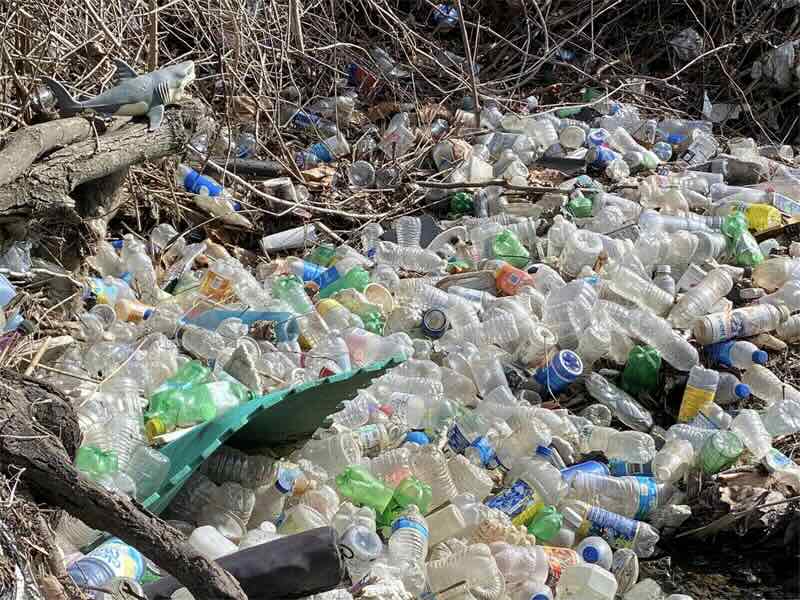
Marylanders buy more than 5.5 billion beverage containers annually, but only about a quarter of them are recycled. More than 4 billion containers every year end up in the environment – in the landfill, incinerated, or littering the landscape and waterways. This is not just a waste of resources: it results in more greenhouse gas emissions and energy use for new products, reduces water quality, and perpetuates plastic pollution.
Beverage containers are more than half of the trash by volume in the Anacostia River watershed and are pervasive in Baltimore Harbor. Plastic bottles are the third most frequently littered plastic in beach cleanups. They break into microplastics, are consumed by wildlife, and move up the food chain. Humans are ingesting up to a credit card’s worth of plastic a week.
The Beverage Container Recycling Refund and Litter Reduction Program (the Maryland Bottle Bill), would reduce beverage container and plastic pollution, and more than triple Maryland’s recycling rate for beverage containers, to 90%. It would add a small deposit to the cost of beverage containers that is refunded to customers when the containers are returned for recycling. Under this program, you’re buying the beverage, but borrowing the container. The deposit is a powerful incentive to return used beverage containers and to collect those that are littered for their refund value.
Ten US states have longstanding recycling refund programs that have reduced beverage container litter as much as 84 percent. Michigan and Oregon have achieved beverage container recycling rates of 90 percent with a 10-cent deposit. These programs collect clean, source-separated materials that can be used in the production of new containers, reducing greenhouse gasses and saving energy. They are the most successful policy in existence for reducing beverage container waste and critical for success in the next phase of waste reduction: promoting refillable and reusable beverage containers.
In Howard County, the program would divert thousands of tons of beverage containers annually from litter and the waste stream, and capture them for recycling into new containers. It would save the County money, because the program is funded by beverage companies, not taxpayers. The County would have no obligation to finance, operate, or enforce the program. Statewide, it would divert an additional 3.6 billion containers per year from litter and the waste stream, 2.3 billion of which are plastic bottles.
The Maryland Bottle Bill, supported by 90 percent of voters, passed the House Environment and Transportation Committee in 2025! We need your help and the support of our County Council and Executive to get it over the finish line in the Maryland General Assembly in 2026!