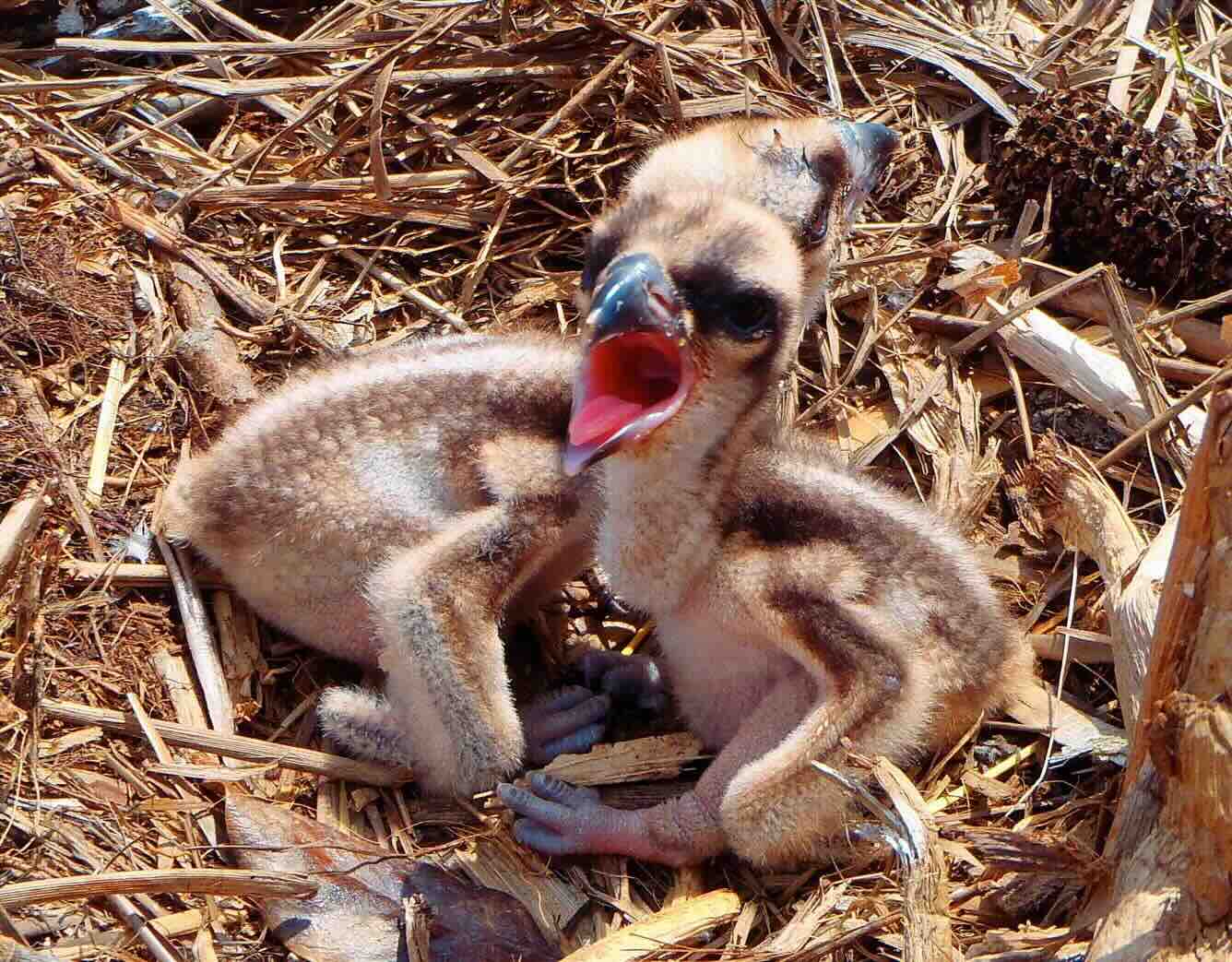
Photo credit: Rebecca Lazarus, USGS
Researchers are finding an increasingly alarming number of starving osprey chicks unable to survive their first few weeks, and nutritional deprivation so severe that a substantial portion of female ospreys are failing to lay eggs entirely. In fact, in some areas 74% of the nesting pairs failed to produce any young. Current reproduction rates have plummeted far below levels to sustain ospreys with an expected decline of 14% of the osprey population annually.
The cause of this decline is depletion of menhaden fish, which are important for the survival of every fish-eating bird that shares their habitat, and marine life including striped bass, bluefish, redfish, bluefin tuna, humpback whales, dolphins. Menhaden are critical to the diet of ospreys and to support Bay wildlife.
Virginia remains the only East Coast state that permits industrial reduction fishing—the practice of vacuuming up entire schools of menhaden using massive nets and to grind them down into fish meal, oil, and supplements. The commercial fleet, operated by just one company, currently has an annual cap of 51,000 metric tons within the Chesapeake Bay alone.
After years of outcry due to the growing crisis, the Atlantic States Marine Fisheries Commission (ASMFC) has advanced a draft addendum to implement stricter protections. Proposed regulatory changes include reducing the Chesapeake Bay harvest cap by up to 50% and enforcing strict seasonal time-period quotas to distribute fishing pressure more safely throughout the year.
ASMFC needs to hear your comments by October 10th to support the strictest protections they have proposed.
