When you sign up for the Get the Lead Out Toolkit, you’ll receive everything you need to start protecting wildlife and waters from harmful lead pollution. The kit includes a step-by-step guide on how to safely dispose of old lead tackle, instructions for building a collection container, and ideas for spreading awareness in your community. You’ll also get a poster and sticker to help label your container and share the message with others. Together, these resources make it easy to take action and keep loons, eagles, turtles, and other wildlife safe.
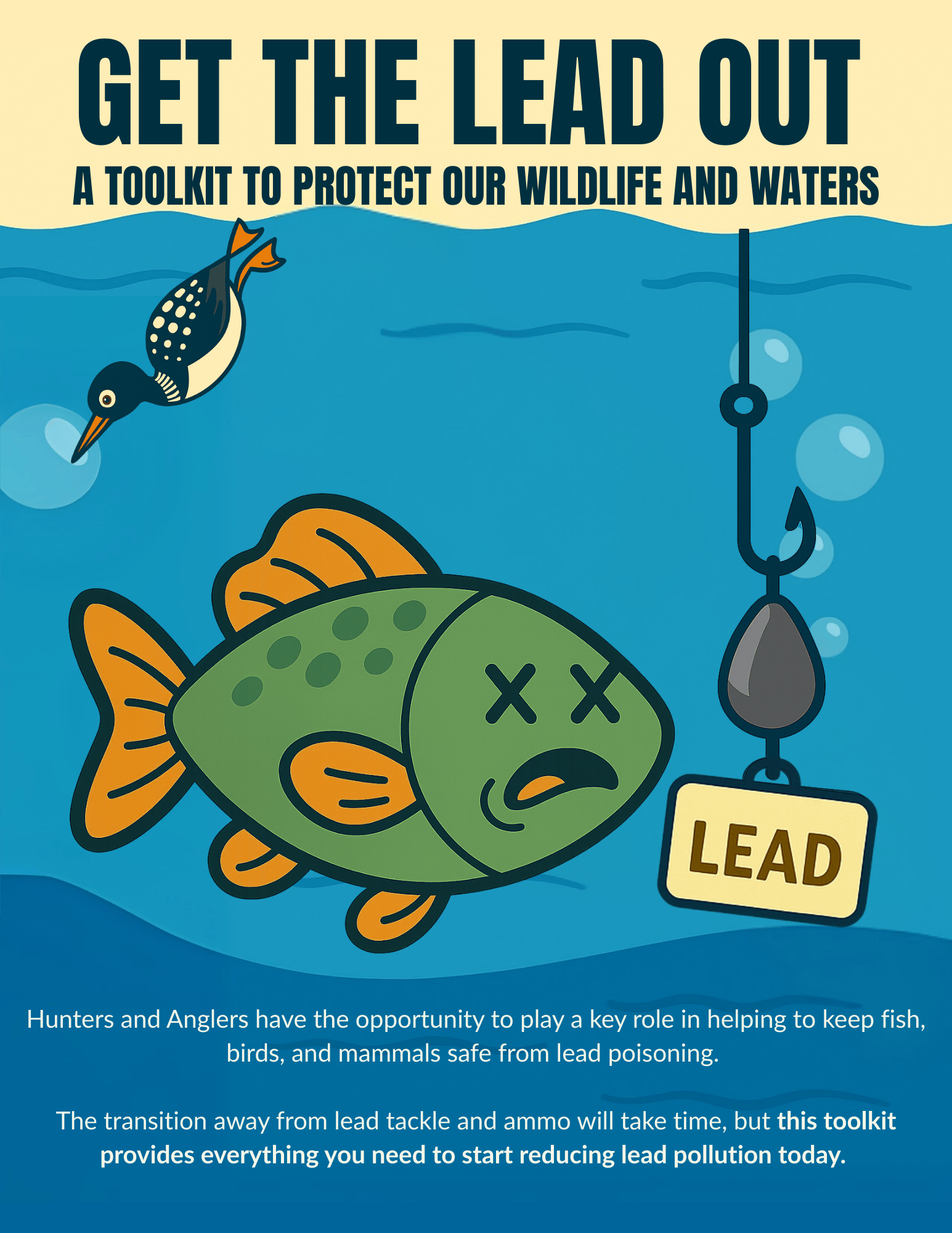
Hunters and Anglers have the opportunity to play a key role in helping to keep fish, birds, and mammals safe from lead poisoning. If you’re not a hunter or angler, you can still help keep lead away from people and wildlife.
For over a century, scientific data has shown lead based ammunition and fishing tackle have had negative effects on wildlife throughout the world. Once in the environment, it persists for hundreds of years. According to the American Bird Conservancy, over 16 million birds are poisoned by lead every year.
Lead poisoning in Wisconsin
Eagles, loons, swans, and other species will pick up pieces of the toxic metal left behind from bullets or fishing gear, some pieces as small as a grain of rice. Wildlife will scavenge on gut piles, discarded carcasses and unrecovered game ingesting these tiny lead fragments. And just like humans, they face dire health consequences from lead exposure. Lead bioaccumulates, or collects over time in animal tissues and bone. This bioaccumulation causes lead-poisoned animals and birds to succumb to starvation and disease, and renders them more prone to trauma or predation. Lead has been called a “silent killer” for this reason. Even a single lead split shot can be lethal to a twelve‑pound loon, highlighting how deadly lead fishing sinkers and jigs can be to wildlife that mistake them for food or grit.
According to Cornell University College of Veterinary Medicine, each year in the US, 10-20 million animals die from lead poisoning.
- Here are some key concerns about lead and wildlife:
- Bald Eagles and Lead: A recent study of bald and golden eagles across the U.S. found that almost half of them suffered from chronic lead poisoning — and that lead was suppressing their population growth.
- In a DNR study from 2009, toxicologist Sean Strom and his team found that lead also poses a major threat for trumpeter swans and common loons.
- Lead fishing tackle doesn’t just kill birds —it can also poison other water creatures including otters, raccoons, snapping turtles and other reptiles when they ingest or scavenge contaminated prey, according to the Wildlife Society.
- Lead poisoning impacts humans as well-- lead bullet fragments can contaminate the meat that people consume, posing a risk of lead exposure.
Lead poisoning is 100% preventable and can be eliminated.
When you sign up, you'll immediately get a link to the electronic version of the toolkit and a mailed version, including the poster and sticker for your container, will be mailed to you in a couple of weeks.
Learn more about lead pollution and what you can do here: sc.org/LeadOutToolkit
